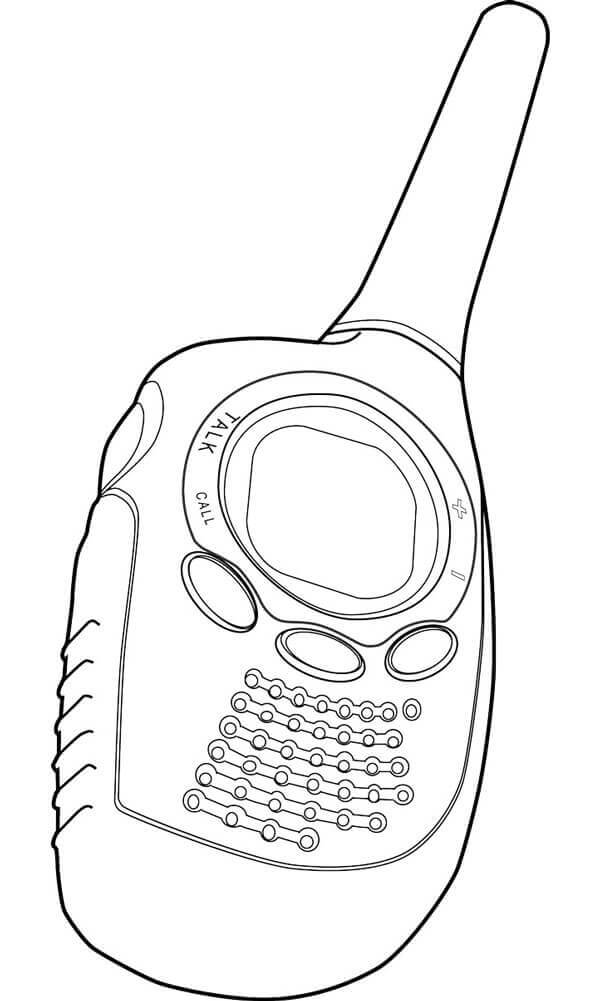
Practical Etiquette for Successful Communication with your Family Radio (FRS) on the Neighborhood Networks
Recently, we had a test of our Neighborhood Network here in Upper Fernwood on Family Radio Service (FRS), channel 14. It was a good turnout of neighbors who wanted to get involved in practicing emergency communications in case cell service is interrupted. During the test, my neighbor, Robert, asked a really good question: “How do we communicate without stepping all over each other?”
Do Not Transmit on Channel 15
It is reserved for Top of the Hour (TOTH) messages and is “listen only”. Your local Neighborhood Network channel for your zone is listed in the Topanga Survival Guide. Neighborhood network channels are on TCEP.
As an amateur radio operator with more than 16,000 radio contacts in 187 different countries around the world, avoiding unintentional interference on the airwaves is definitely a skill learned from experience. Using an FRS radio may not require the same skill level as working a world-wide ham radio contest, but the same tricks used in that contest can make that mad dogpile in your neighborhood network a little tamer.
ABOUT FRS RADIOS
They are extremely low-powered FM transmitters with poor antennas. This is part of their design, so they don’t create interference outside of the immediate area. I suggest placing yourself outdoors where you have the best view of the surrounding area. This will extend your limited line-of-site range. Never operate from inside a car or other metal structure as this will inhibit your signal.
Simplex or duplex? The FRS radios use a simplex mode of communication. We are all used to talking with people in full duplex. What that means is that we can usually hear everybody else when we are talking. Simplex is a one-person-at-a-time deal. When a large group of people get on the air, simplex radios can make communicating challenging.
Roundtable or Directed Net? There are two basic ways to make this manageable: a roundtable or a directed net.
In a directed net, participants speak in turn, passing the airwaves from one operator to the next in an established order. In a directed net there is an air traffic controller, so to speak, or a net control station that is directing all the verbal traffic and participants only speak to the net control station. If you have a question or comment for anybody else, it must go through the net control station, never to the other station directly. This method is more formal and somewhat easier for people new to radio to master, especially if it is run by a seasoned net controller.
Okay, you have listened for a while and determined if one of these forms is being used. If neither is being used, then, most likely chaos reigns and people are stepping all over one another’s transmissions. If you find yourself in this situation, you might suggest using one of the above methods to bring the unruly crowd to order.
Coverage & relay stations. If your Neighborhood Network decides to use a directed net, make sure that the net control station has good coverage of the neighborhood. Short of that, establish reliable relay stations that your net control can call to get relayed information from houses on the fringe of your neighborhood.
ETIQUETTE
Rule 1: LISTEN! The first and most important rule of simplex operation is to listen. Turn on your radio in a wide-open location outside, turn up the sound and just listen for a while. You may not be able to hear all the people in an existing conversation, so it is important to listen for a few minutes to determine if the channel is being used.
If the channel is in use, listen to see how many people are on the air. If like, me, you have trouble remembering names, write them down. If just two people are on the air, it’s pretty easy: one person talks, says “over,” and then the next person talks. But what happens when three or more people get into the mix?
What is a heterodyne? When two signals of equal strength reach your receiver, the resulting noise you hear is called a heterodyne. Nobody wins when that happens. If one signal is a lot stronger you will hear the stronger station but there will be noise underneath from the weaker station. If you listen and are patient, everybody will get a turn. Resist the temptation to jump into the fray when things go wrong.
Joining the conversation. Let’s say that you hear a directed net or a roundtable in progress, how do you join the conversation? Again, remember rule number one: Listen. With a directed net, the net control station should, at some point, ask for check-ins. When you hear net control ask for new check-ins, key down, say your name and location slowly and clearly, and unkey. Again, listen and be patient.
Keep it short. Do not try and enter a net or a roundtable with a long-winded initial transmission. I hear this all the time. People go on and on before they have been acknowledged by net control, and often, somebody else was trying to check in at the same time and you “doubled”—or transmitted at the same time. When two people try and enter a net with a long transmission at the same time, everybody else has to suffer through a noisy heterodyne until both people finally unkey. Don’t be that person.
After you say your name and location, listen to be acknowledged. Listen closely to the net controller, who may take your check-in and move on. Do not transmit again until the net control calls on you. If they didn’t get your name and location, wait until the net controller asks for more check-ins. Do not keep calling.
Once you have been acknowledged, wait for the net controller to call you before asking any questions or report any information. Be patient, they will get to you. If not, wait until the net has concluded before trying again to be acknowledged.
The Exception. The only exception to this rule is if you have immediate, life-threatening information to impart. If this is the case, then say “BREAK! BREAK!” If you hear anyone transmit “BREAK! BREAK!” immediately turn the channel over to the breaking station and do not transmit again until the crisis is resolved. Speak only if spoken to, otherwise keep clear of the emergency traffic. The double “Break” is the last resort reserved for bona fide emergencies only.
The Roundtable. This is more common on the airwaves and requires a little more skill to negotiate. The idea is that everybody transmits in an established order. To enter a roundtable, wait until one station hands it over to the next and then key down, say your name and unkey. Again, no long-winded intros to avoid long doubles. Listen to confirm that you have been acknowledged.
Once you have been acknowledged, wait for the transmitting station to hand it over to you. Now you are in the roundtable. Remember your place in the roundtable’s order. Do not talk directly across the table at someone out of order. If you have a question or comment for them, pass it down the line with something like, “When it’s your turn, Cassie, is Medley Lane open? Over to Rosi and Rosi can pass it to David.”
It’s your turn. Now that you are in the roundtable, when your turn comes around, wait a few beats before transmitting. This will give newcomers a chance to throw their name into the ring. If you have someone say their name before your turn in a roundtable, acknowledge that they were heard at the beginning of your turn by saying something like, “Welcome, Robert, to the roundtable,” then hand it over to them after your turn and be sure to tell them whom they should hand it to after they are done. Everybody should then update the list’s order to keep track of the new person.
Reset. If you aren’t sure if it was your turn you can say at the beginning of your transmission “OK, let’s see if I have it here, reset…” and unkey briefly to listen if someone else is transmitting underneath you. If you don’t hear anybody, you may continue to transmit. This helps cut down on annoying double transmissions because two people thought it was their turn at the same time. If you hear someone say “reset,” that means they are coming right back. Wait.
Don’t just toss it up in the air after you transmit with an “over.” Instead say something like, “Over to Kim.” If you have listened and determined the order of the roundtable, this will go a long way in cutting down on the chaos. You can even add “…and Kim you can pass it to Robert,” to help the next person maintain the rotation.
Never criticize another participant’s operating on the air. We all make mistakes and calling people out on the air is not a constructive way to help them learn.
Jammers. Occasionally nets are interrupted by intentional interference from jammers who crave attention. Under no circumstances should you ever acknowledge a jammer. It can be sorely tempting to tell them what you think of them but, trust me on this, you will just be pouring gasoline on the fire. As far as you are concerned, jammers do not exist.
Practice! Practice these steps and you will sound like a pro in no time. I suggest that your Neighborhood Network get together to decide which form the group would like to use—Directed Net or Roundtable—and practice it. Practice will greatly improve everybody’s operating skills and help make all the participants “Smooth Operators.”
Eric Fitzgerald is a graphic designer in the entertainment industry. He is curious about a wide range of things: astronomy, meteorology, and amateur radio (KG6MZS).